
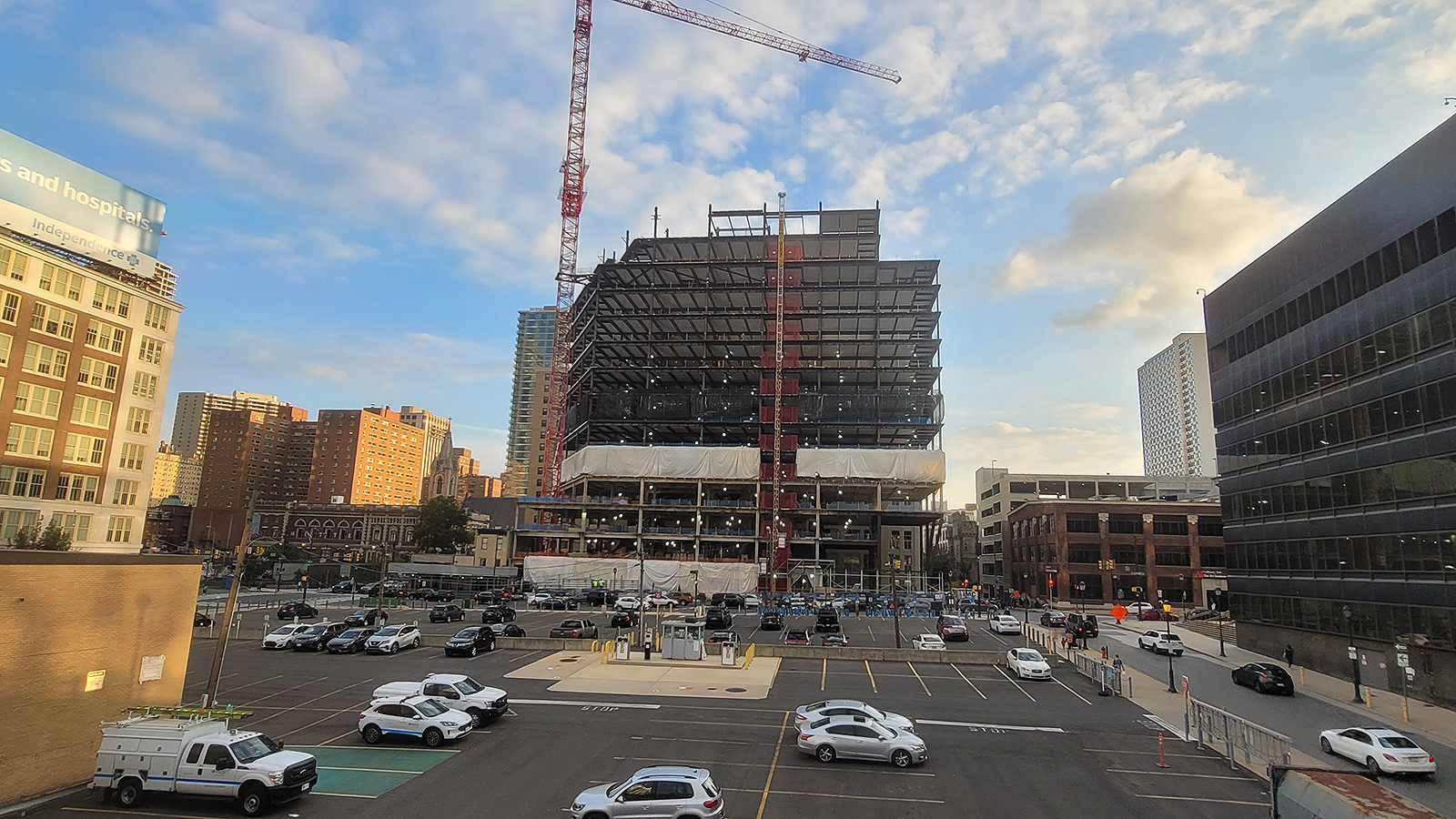
A Market Street photo walk can trace Philadelphia from Old City’s historic blocks to the commercial core and City Hall without requiring a car. Start near 2nd Street, move west past Franklin Court and Independence National Historical Park, pause around Reading Terminal Market, and finish at Broad Street. Allow two to three hours for the roughly 13-block route. The main limitation is traffic and pedestrian density: this is an active transit corridor, so stay handheld, cross with signals, and never step into a bike or vehicle lane for a centered frame.
Market Street photo walk at a glance
- Start
- 2nd and Market Streets in Old City
- Finish
- City Hall at Broad and Market Streets
- Route
- Approximately 13 city blocks, plus short side-street detours
- Time budget
- Two to three hours; 90 minutes from 5th Street for a shorter version
- Transit
- Market-Frankford Line stations serve the corridor
- Best light
- Morning for Old City; late afternoon and blue hour for the street canyon and City Hall
- Equipment
- One normal zoom or a phone; stay handheld in busy areas
- Facts last verified
- July 29, 2026
Stop 1: begin with Old City’s smaller scale
Start around 2nd and Market Streets, where narrow façades, signs, loading activity, and glimpses toward the Delaware establish the older commercial street. Work west toward Franklin Court between 3rd and 4th Streets. The National Park Service identifies Market Street as one entrance to the former site of Benjamin Franklin’s home, but the historic resources extend onto adjacent Chestnut and Arch Street blocks.
Morning light can reach the east-west corridor before the sidewalks fill. Use a 28–50mm equivalent to keep façades upright and include street context. A telephoto lens is useful for compressed signs and layers, but it can also make a distant pedestrian appear much closer than they are. Respect privacy and wait for clean gestures rather than confronting strangers with a lens.
Stop 2: use Independence Mall as a reset
At 5th and 6th Streets, the Independence Visitor Center provides restrooms, water, maps, and a weather break. The current National Park Service schedule lists the center open daily from 9 a.m. to 6 p.m., with the ranger desk closing at 5 p.m. The Liberty Bell Center, Independence Hall, and other park buildings have their own hours and screening rules.
Photography is allowed in most Independence National Historical Park buildings, but tripods are prohibited throughout the park and no photography is allowed in security-screening areas. Handheld visitor photography keeps the route simple. If an interior matters, verify tickets and hours first rather than allowing the entire walk to stall in a security line.
Stop 3: photograph the commercial middle carefully
Continue west through the blocks around 8th, 10th, and 12th Streets. Transit entrances, buses, delivery vehicles, signs, and overhead building layers make this the busiest section. Keep the camera strap close, stop against a building edge rather than in the center of the sidewalk, and compose before raising the camera.
Reading Terminal Market sits just north of Market Street near 12th Street and makes a logical food and restroom stop. It is also the bad-weather pivot: end the outdoor route there if rain, heat, or wind makes street photography unpleasant. Individual businesses and interior areas may have their own photography expectations, so ask before focusing closely on staff or merchandise.
Stop 4: finish with City Hall and Broad Street
The final blocks open toward Philadelphia City Hall at Broad and Market Streets. A standard lens captures the building with traffic and transit; a longer lens isolates the clock tower and William Penn statue. Late-day light moves through the street canyon unevenly, so watch which façades receive light instead of assuming the westward view will be uniformly warm.
Blue hour adds transit lights, moving vehicles, and office windows, but it also increases crossing risk. Make long exposures only from a position where equipment cannot obstruct the sidewalk. If a tripod is impractical, brace the camera responsibly or use stabilization and a higher ISO. Do not place equipment on a roadway median.
What should be cut from a shorter walk?
For 90 minutes, start at the 5th Street Market-Frankford Line station, photograph the historic district edge, and continue to City Hall. Skip interiors and Reading Terminal unless weather requires a break. For a history-heavy version, remain between 2nd and 7th Streets and use the National Park Service map rather than forcing the commercial corridor into the same visit.
Official sources and updates
- National Park Service: Independence park access, photography, transit, and restrooms
- National Park Service: current Independence park hours
- National Park Service: Market Street transit and parking directions
- National Park Service: filming and photography rules
Related Philadelphia reading
Trade the street canyon for the Schuylkill River Trail, compare a more reflective historic landscape at Laurel Hill West, or check current legal access and alternatives in the Graffiti Pier guide.